
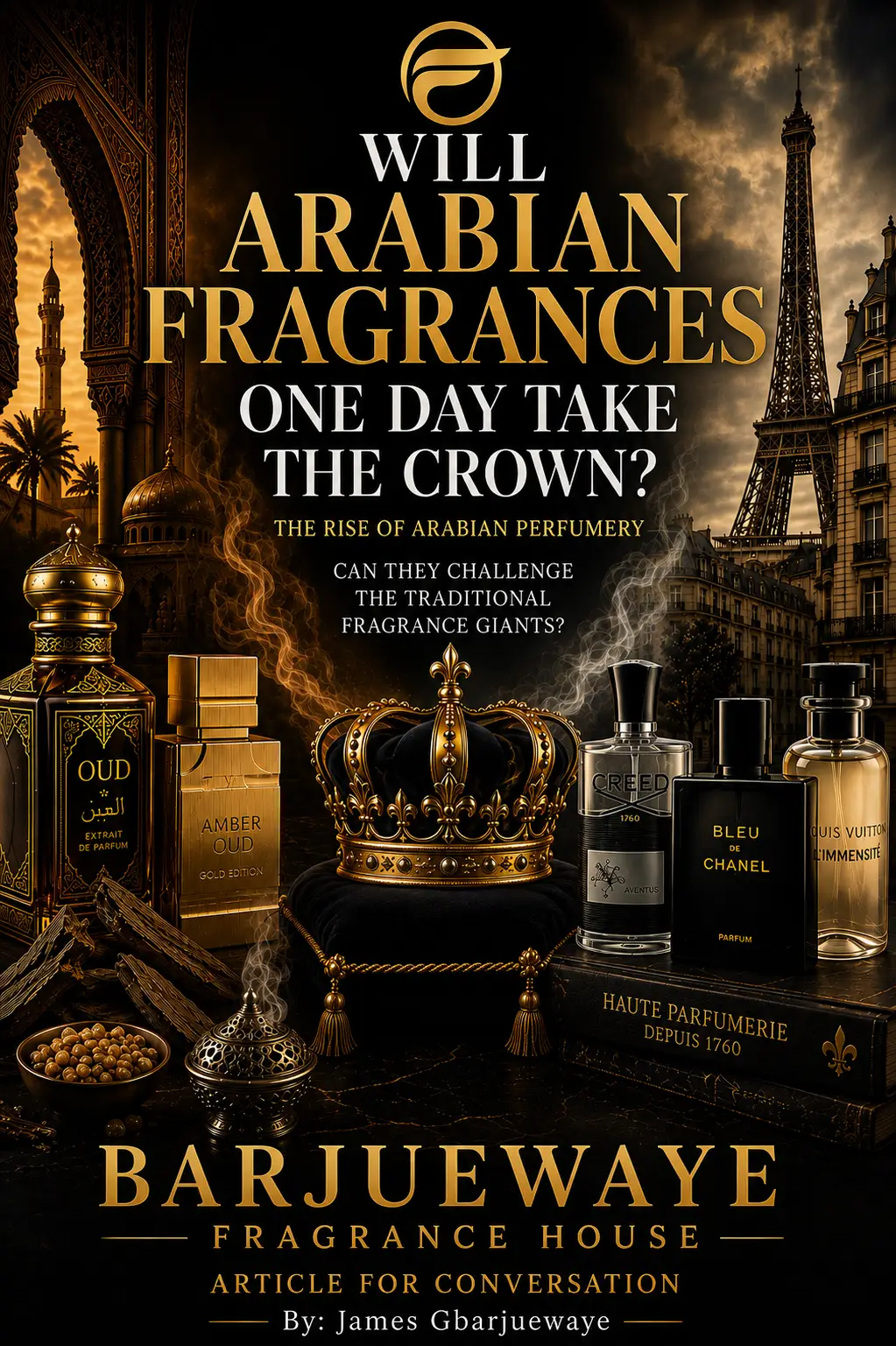
For almost the last 300 years, European—and later American—fragrance houses have occupied the top slot within the modern fragrance world. Kings and queens, nobility, diplomats, businessmen, laymen, and everyday fragrance wearers have all had their favorite scents, many of which came from European or American fragrance houses.
This long-established presence has given Western fragrance houses a major advantage and has helped solidify their dominance within the modern fragrance industry. You even have entire cities such as Grasse, France, which is widely recognized for its historic importance to the world of perfumery.
However, the Middle East and Arabian perfumery have histories stretching back much further.
For thousands of years, the region has been associated with aromatic materials and traditions involving oud, frankincense, myrrh, musk, rose, saffron, and concentrated perfume oils. The Arab and Islamic worlds also played an important role in the development and documentation of perfume-making and distillation techniques.
This creates an interesting contrast. While European and American fragrance houses have dominated much of the modern commercial fragrance industry, Middle Eastern perfumery has roots extending deep into the history of fragrance itself.
The Rise of the Modern Arabian Fragrance House
Today, Arabian fragrance houses are no longer simply regional players.
Brands such as Al Haramain, Lattafa, Armaf, and Rasasi have built international followings, particularly through fragrances such as Amber Oud Gold Edition, Yara, Khamrah, Club de Nuit Intense Man, and Hawas.
What makes this even more impressive is how quickly many of these fragrances have gained international attention.
This brings us to the question behind this article:
Could Arabian fragrance houses eventually take the crown from the European and American heavyweights of the fragrance world?
When I say heavyweights, I am talking about houses and luxury brands such as Chanel, Creed, Ralph Lauren, Gucci, Louis Vuitton, Parfums de Marly, Valentino, and others that have helped define the modern international fragrance market.
My answer?
Possibly—but I believe there are still some major hurdles that Arabian fragrance houses would have to overcome first.
The Originality Question
First, credit must be given where credit is due.
Modern Arabian fragrance houses have made tremendous progress within a relatively short period of time. If they continue with this momentum, I believe their influence on the global fragrance industry will only continue to grow.
However, when we start talking about actually taking the crown, I believe originality becomes one of the biggest issues.
A number of successful Arabian fragrances are frequently compared by consumers, reviewers, influencers, and fragrance enthusiasts to established European niche fragrances.
For example, Amber Oud Gold Edition is frequently compared within the fragrance community to Xerjoff’s Erba Pura. Armaf’s Club de Nuit Intense Man is widely compared to Creed Aventus. Lattafa Khamrah has also frequently entered conversations surrounding Kilian’s Angels’ Share, although fragrance enthusiasts differ considerably on just how similar those two fragrances actually are.
That distinction is important.
Unless a fragrance house itself says that it intentionally created a fragrance to imitate another product, I don’t believe we should automatically assume that was the company’s intention.
But perception still matters.
When enough consumers, reviewers, influencers, and enthusiasts repeatedly compare one fragrance with another, that comparison can become part of the fragrance’s public identity—whether the manufacturer intended it or not.
And these are the same consumers whose opinions will ultimately help determine which brands become the industry’s future leaders.
In my opinion, for Arabian fragrance houses to reach the very top of the global fragrance industry, they need more fragrances whose identities are unmistakably their own.
They have the experience. They have the manufacturing capabilities. They have increasingly sophisticated branding. And judging by their international growth, they clearly understand how to connect with modern fragrance consumers.
The next step is creating even more fragrances that other companies eventually want to follow.
That, to me, is the difference between competing for the crown and actually wearing it.
Where Arabian Fragrances May Already Be Winning
There is one area where I believe Arabian fragrance houses deserve enormous credit:
Value.
One of the major reasons I believe Arabian fragrances have become so successful in America, Europe, and other markets is their ability to offer consumers impressive fragrance experiences at accessible price points.
For years, lower prices within many consumer industries were often associated with lower-quality presentation. Arabian fragrance houses have challenged that perception.
Some offer elaborate bottles, detailed boxes, substantial presentation cases, and overall packaging that can feel far more expensive than the price of the fragrance itself.
In my personal opinion, some Arabian fragrance presentations are already competing with—and occasionally surpassing—the presentation of significantly more expensive Western fragrances.
If this conversation were strictly about bottles, branding, packaging, and value for money, I would argue that Arabian fragrance houses aren’t waiting for the crown.
They are already competing for it.
Consistency Will Matter
Another area I believe deserves attention is consistency.
Through my own experience within the fragrance business, I have occasionally encountered bottles of the same Arabian fragrance that seemed slightly different from one another.
There can be many possible explanations for perceived differences between bottles—including batch variation, storage conditions, age, reformulation, transportation conditions, or even individual perception—so I would not automatically attribute every difference to manufacturing quality control.
Nevertheless, consistency matters.
As Arabian fragrance houses continue expanding globally, consumers should feel confident that an authentic bottle purchased today will provide an experience reasonably consistent with another authentic bottle of that same fragrance.
The largest established fragrance houses have spent decades building that kind of consumer confidence.
Arabian fragrance houses competing at that level will increasingly be expected to do the same.
Brand Protection
Another challenge is brand protection.
Counterfeit fragrances are not uniquely an Arabian fragrance problem. European, American, designer, niche, and luxury fragrance companies all face counterfeiting and unauthorized distribution.
However, as Arabian fragrance brands become more successful internationally, protecting their names, packaging, trademarks, distribution networks, and customers will become increasingly important.
Very low-priced listings for products claiming to be well-known Arabian fragrances can appear across third-party marketplaces. Without authentication, neither consumers nor commentators should automatically assume those products are genuine—or counterfeit.
That uncertainty itself can become a problem for a growing brand.
The stronger these companies become, the more important it will be for them to help consumers distinguish legitimate products and authorized sellers from questionable listings.
Protecting the consumer ultimately protects the reputation of the fragrance house.
So, Can Arabian Fragrances Take the Crown?
I believe they can eventually have a legitimate shot.
Look at what they have already accomplished.
They have mastered eye-catching bottle and packaging design.
They have produced quality, long-lasting fragrances at extremely competitive prices.
They have embraced online marketing, fragrance influencers, and social media exceptionally well.
Most importantly, they have convinced millions of consumers around the world that a great fragrance experience does not necessarily have to come with a luxury European price tag.
That is no small accomplishment.
But taking the industry’s symbolic crown requires something more.
It requires creating fragrances that establish trends rather than simply being compared to them. It requires consistency as brands expand across markets. It requires stronger brand protection. And it requires continuing to build identities powerful enough that consumers recognize the fragrance house before they recognize the fragrance it may remind them of.
Considering how much modern Arabian fragrance houses have accomplished in such a relatively short period of time, their future looks extremely bright.
The question may no longer be whether Arabian fragrance houses can compete with the traditional giants.
The real question is:
How far can they go?
What are your thoughts?
Do you believe Arabian fragrance houses could one day take the top slot in the global fragrance industry?
What hurdles do you think they still need to overcome?
And what are your favorite Arabian fragrances currently on the market?
Let’s continue the conversation in the comments.