
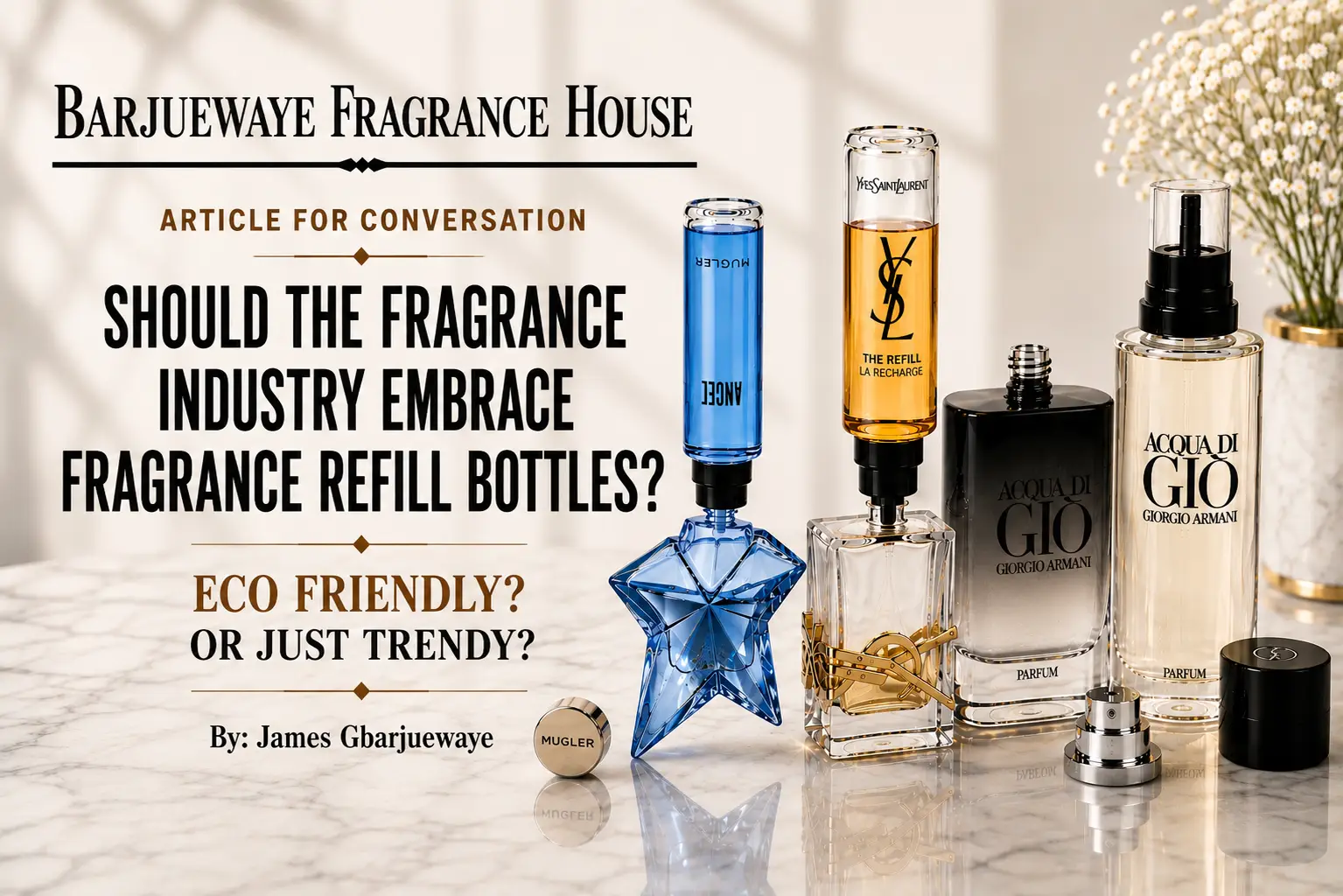
Before we begin this conversation, it’s important to understand exactly what a fragrance refill bottle is and how the concept works.
The modern refillable fragrance bottle is widely credited to Thierry Mugler’s Angel, introduced in 1992. As far as fragrance bottle design is concerned, Angel is often regarded as one of the most iconic and innovative bottles ever created—especially considering it debuted in the early 1990s.
Not every Angel bottle was refillable, however. Mugler introduced a special refillable version that worked alongside the famous Mugler Fountain system. Instead of purchasing a brand-new bottle each time, customers could bring their empty refillable bottle to participating retailers and have it refilled. This was decades before refillable fragrances became a widespread industry trend and long before sustainability became a major focus for luxury brands.
It is often said that if you want a glimpse into the future, you should first visit the past. While Thierry Mugler is credited with introducing the first modern refillable fragrance system, the idea itself was far from new. The concept was inspired by 18th-century perfume fountains, where wealthy customers would refill ornate decorative perfume bottles rather than purchase entirely new ones. Mugler simply modernized this centuries-old practice for contemporary luxury perfumery.
Today, many fragrance houses are beginning to embrace refillable bottles as they look for ways to reduce packaging waste while offering consumers a more sustainable purchasing option.
Modern refill systems generally rely on one of three methods: valve-to-valve transfer, screw-neck decanting, or in-store refill fountain stations. These systems are specifically designed to minimize spills and limit the fragrance’s exposure to air, helping preserve the integrity and quality of the perfume during the refill process.
The biggest difference between purchasing a refillable fragrance and buying a traditional bottle usually comes down to cost. The initial purchase of a refillable bottle is often slightly more expensive, but subsequent refills typically cost less than purchasing an entirely new bottle. Refillable bottles may also feature small design differences compared to their non-refillable counterparts.
At the moment, refill options are still largely limited to selected luxury fragrances, with popular releases such as Dior Sauvage and YSL Libre leading the way.
The advantages of refillable fragrances are fairly obvious. They reduce packaging waste, making them a more environmentally friendly option. They can also provide long-term savings for consumers who have found a signature scent they purchase repeatedly. From a business standpoint, refill systems also encourage customer loyalty. A customer who invests in a refillable bottle is often more likely to return to the same brand for future purchases.
There are disadvantages as well. Refillable bottles are generally more complex to manufacture, which can increase production costs and, ultimately, retail prices. Many fragrance enthusiasts also enjoy collecting bottles, and refills naturally reduce the excitement of purchasing a completely new presentation.
Additionally, not every fragrance is designed with a refill system in mind. Many consumers are uncomfortable refilling bottles themselves, while in-store refill stations require specialized equipment, trained staff, and valuable retail space. Whether these factors explain why refill programs remain relatively limited throughout the industry is certainly open for debate.
This discussion becomes even more interesting when you consider how diverse the fragrance industry really is.
For example, should every niche fragrance house offer refills? Niche fragrances are often significantly more expensive than designer fragrances, but many consumers wear them less frequently because they reserve them for special occasions. While refill systems may still provide environmental benefits, do they truly make economic sense in every situation?
Another area I believe deserves more attention is the rapidly growing Arabian fragrance market.
Arabian fragrance houses often produce some of the most beautifully designed bottles in the industry while simultaneously offering exceptional value at relatively affordable prices. This raises an interesting question: Should these brands invest in refill programs as well?
Personally, I believe refill systems make the most economic sense once a fragrance reaches a certain price point and develops a loyal base of repeat customers. Popular fragrances such as Dior Sauvage or J’adore are excellent examples because consumers often purchase them multiple times over several years.
If I had to nominate an Arabian fragrance for a refill program, Al Haramain Amber Oud Gold Edition would probably be my choice because of its devoted following. However, considering its competitive price point, I still question whether introducing a refill system would make enough financial sense for either the brand or the consumer.
Ultimately, I believe refillable bottles provide genuine environmental and economic benefits, particularly for consumers who have found a signature fragrance they intend to wear for years. At the same time, fragrance is also an emotional and artistic product. Many enthusiasts enjoy collecting bottles, experiencing new presentations, and even appreciating the ritual of purchasing a brand-new fragrance.
For that reason, I don’t believe refill programs should replace traditional bottles. Instead, they should exist alongside them, giving consumers the freedom to decide which option best suits their lifestyle.
An industry-wide shift toward mandatory refillable bottles doesn’t seem practical—at least not today. Refill systems may make perfect sense for some fragrances and brands while offering little value for others.
As refill stations and refill bottles continue to grow in popularity, one important question remains:
Are refillable fragrances truly the future of perfumery, or are they simply another industry trend?
Would you purchase a refill bottle if your favorite fragrance offered one, or would you still prefer buying a brand-new bottle each time?
Should more of today’s most popular fragrances become refillable?
Let us know your thoughts in the comments below and join the conversation.