
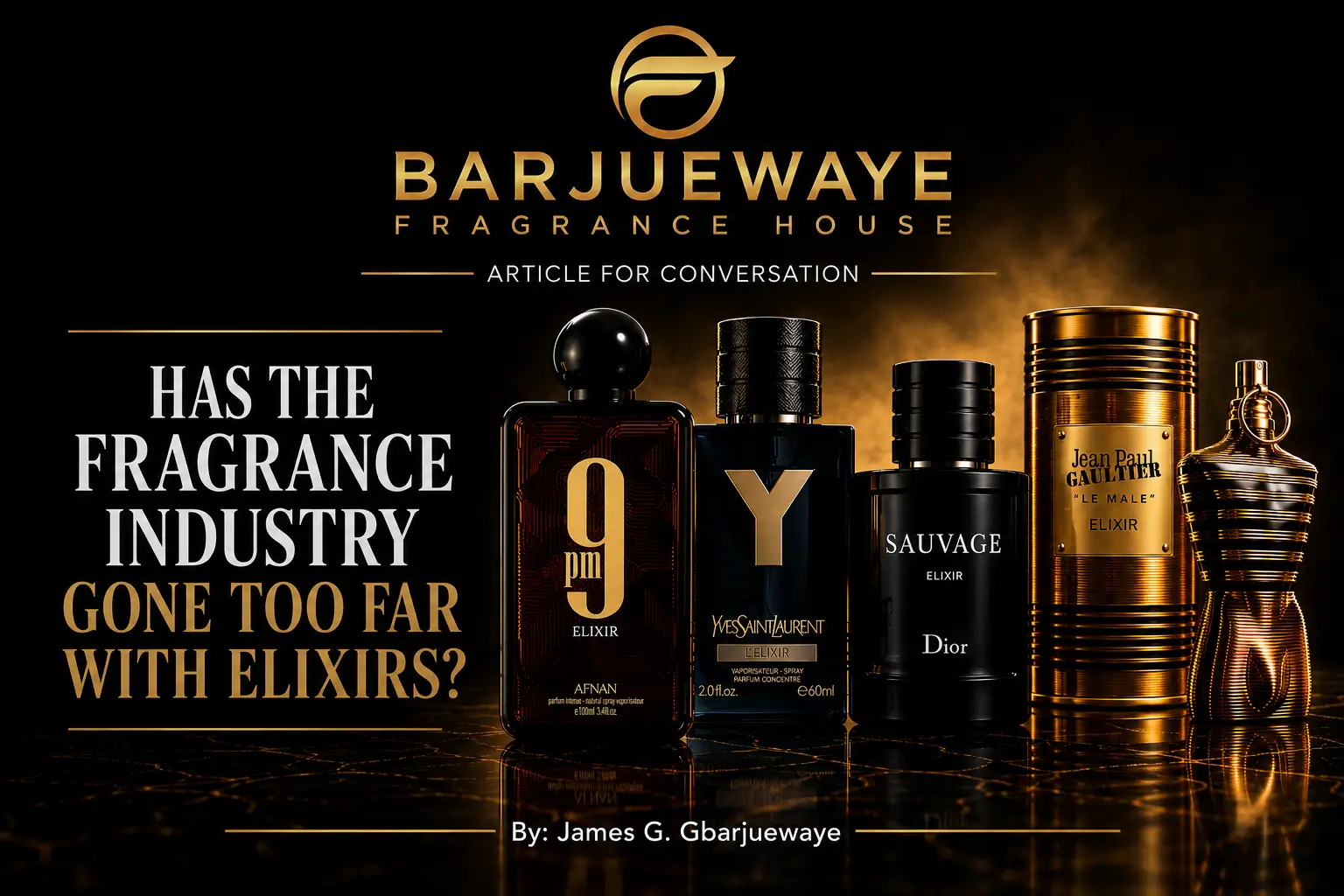
Over the past few years, one trend has become impossible to ignore in the fragrance industry: the rise of the Elixir.
It seems that nearly every major fragrance house now wants an Elixir version of its most successful release. But are Elixirs truly filling a gap in the market, or have they simply become the latest marketing strategy consumers have embraced?
Before answering that question, it’s important to understand what an Elixir actually is.
An Elixir is generally considered an ultra-concentrated, richer interpretation of an existing fragrance. While there is no universal industry standard that legally defines an Elixir concentration, the term is commonly used to describe a darker, denser, and longer-lasting version of the original scent. These fragrances typically feature higher fragrance oil concentrations and place greater emphasis on depth, richness, and performance.
Many fragrance enthusiasts point to Dior Sauvage Elixir as the release that sparked today’s Elixir boom. Following its enormous commercial success, numerous fragrance houses introduced their own interpretations. Collections such as Paco Rabanne One Million, Azzaro Wanted, Jean Paul Gaultier Le Male, Coach Man, Armani Code, and even more budget-friendly offerings like Armaf 9PM have all embraced the Elixir trend.
From a performance standpoint, it’s easy to understand the appeal. Elixirs are often powerful fragrances with impressive longevity and projection. They are designed to make a statement, and for many consumers, that’s exactly what they’re looking for.
However, after personally experiencing Elixirs from a variety of fragrance houses, one observation continues to stand out.
While each Elixir certainly carries the DNA of its original fragrance, many of them begin to occupy remarkably similar territory. Rich spices, dense woods, amber accords, sweet resins, and darker aromatic notes frequently dominate these compositions. They are all well-crafted fragrances, and each has its own unique personality, but from a distance, the differences may not be as obvious to the average person.
Someone walking past a person wearing Dior Sauvage Elixir, Armani Code Elixir, or Coach Man Elixir may recognize that they’re smelling a bold, expensive fragrance, but they may not immediately distinguish one from another. That’s not a criticism of the fragrances themselves—it’s simply an observation that many Elixirs seem to share a common style of scent profile.
Another point worth discussing is value.
In many fragrance collections, the Elixir is both the smallest bottle offered and the most expensive. Two-ounce bottles are common, yet they often command the highest price in the lineup. Manufacturers generally justify the premium by citing the increased concentration of fragrance oils and the higher cost of producing these formulations.
Whether that premium represents good value ultimately depends on the individual consumer.
Perhaps the more interesting question isn’t whether Elixirs smell good—they often do—but rather whether every successful fragrance actually needs one.
As consumers, we’ve embraced the concept. The continued success of Elixirs demonstrates that there is genuine demand for them. If people weren’t buying them, fragrance houses wouldn’t continue producing them.
Still, one question remains.
What exactly separates an Elixir from a Parfum?
Parfum concentrations have traditionally represented the richest and most concentrated version of a fragrance line. With the introduction of Elixirs, the distinction has become less clear. Are Elixirs an entirely different fragrance experience, or are they simply another way of presenting a higher concentration with a darker, more intense character?
For blockbuster fragrances that consistently sell around the world, expanding the lineup with multiple variations —including an Elixir—makes perfect business sense. Consumers enjoy having options, and successful fragrances naturally evolve over time.
However, when fragrances with only one or two existing concentrations quickly receive an Elixir edition, it raises an interesting question about necessity. Is the Elixir being introduced because consumers genuinely asked for it, or because the market has come to expect every major release to have one?
There’s also the matter of wearability.
Not everyone wants maximum projection or all-day intensity. Some people work in professional environments where subtle fragrances are more appropriate. Others simply prefer lighter scents that sit closer to the skin. For those consumers, an Elixir may actually be the least practical option in the collection.
Price is another consideration. With many Elixirs carrying retail prices of $125 or more, they can become difficult entry points for new fragrance enthusiasts. While dedicated collectors may happily pay the premium, casual buyers often find themselves weighing whether the additional performance justifies the added cost.
Final Thoughts
The fragrance industry has clearly entered the era of the Elixir, and there’s little indication that the trend will slow down anytime soon. Consumers continue to purchase them, brands continue to release them, and the category has become one of the fastest-growing segments in modern perfumery.
But perhaps the more important conversation isn’t whether Elixirs are good—they often are.
It’s whether every fragrance collection truly needs one.
As long as fragrance lovers continue to embrace them, Elixirs will likely remain a permanent fixture in the industry. Whether they represent genuine innovation or simply the latest evolution of fragrance marketing is a question each collector will have to answer for themselves.
What do you think? Are Elixirs a worthwhile addition to fragrance collections, or has the trend gone too far? Let’s continue this conversation in the comment section.